
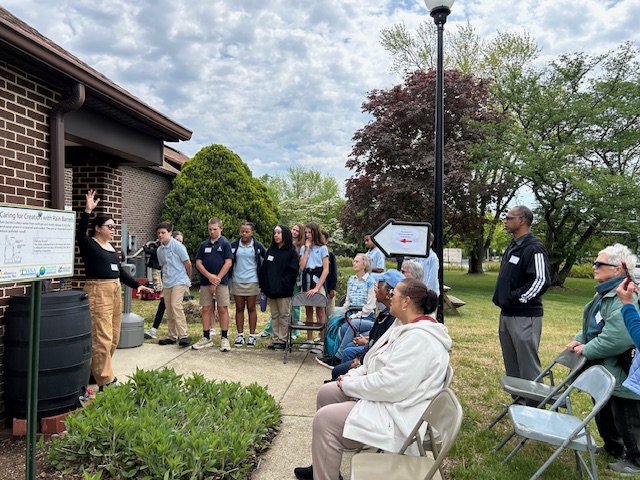
 Living in the mid-Atlantic region means expecting rain. While many of us might find ourselves humming the nursery rhyme “Rain, rain, go away. Come again another day” while looking at the weather forecast ahead of time spent outdoors, thinking about stormwater runoff and water quality in the Chesapeake Bay requires a different perspective. We welcome the rain, and invite it to slow down and stay where it falls. In this spirit, St. Philip’s Episcopal Church in Annapolis held a rain barrel workshop and giveaway on Earth Day to install new green stormwater infrastructure at their church. The event brought together around 100 members of local congregations and the neighboring school to learn about rain barrels and stormwater runoff.
When we build impervious surfaces like buildings and parking lots, we interrupt the water cycle. Rain that falls on these surfaces can rapidly accumulate because it has nowhere to go. As it accumulates, it moves downhill towards the bay, picking up trash, fertilizers, herbicides, and other pollution with it. The flowing streams can erode the land on their way to the bay and carry excess sediment downstream. All of these factors impact water quality and the health of the bay. One aspect of why green stormwater infrastructure is so important is that it slows down the runoff and lets the natural water cycle do its work. When water falls on, or is diverted to, non-impervious surfaces, it soaks into the ground. The soil, plants, and soil biota take up the water and prevent much of the pollution from flowing downstream. Plants can take up the nutrients, the sediment settles on the ground, and microbes can even break down some pollutants. The result is better-hydrated plants upstream and better water quality downstream. A win all around!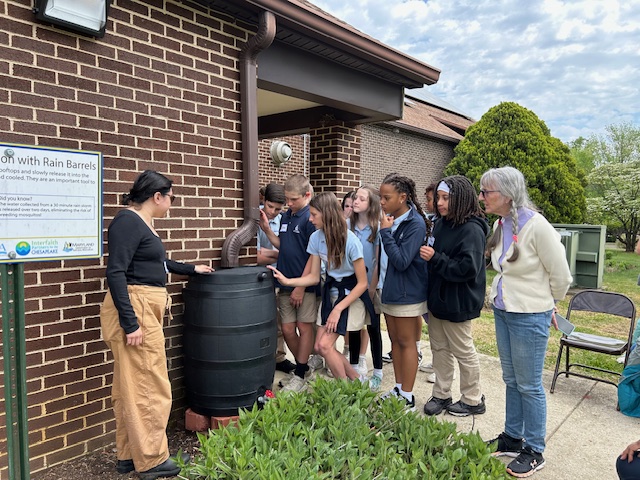 To address the stormwater run-off from their church, St. Philip’s collaborated with LimnoTech and IPC to apply for a grant to install rain barrels. The rain barrels capture the rain running off the roof. This can be repurposed on the property to wash equipment, water plants, and save the use of treated water from the tap. Led by Ann O’Malley, they were awarded a Chesapeake Bay Trust Community Engagement and Restoration Grant to install the rain barrels and host an educational event to demonstrate how to install and maintain the rain barrels. This event was a great example of how the One Water Partnership brings people together to care for creation and have fun doing it!

Do you like this page?