
Plastic disposal is a global issue. Plastics are also a fossil fuel issue. The materials used to make plastic come from refining crude oil and natural gas, and the process requires a lot of energy generated by burning fossil fuels, accounting for 4-8% of the global oil supply each year. By some estimates, the amount of plastic produced each day uses more oil than the total amount spilled during the Deepwater Horizon disaster in 2010 (6.4 million barrels vs 4.9 million barrels, although exact estimates vary). It can be overwhelming at times. But like many large-scale problems, there are local actions we can take to make our communities more resilient to global changes.
The Howard County Office of Community Sustainability is leading the way on these local actions with partnerships and financial support through the Howard County Plastic Reduction and Environmental Protection (PREP) grant. The PREP grant funding comes from the Howard County plastic bag fee, implemented in 2020, and supports local organizations that want to reduce waste and implement environmentally friendly solutions. For this feature, we wanted to highlight some of the work that is happening to inspire people across the watershed to take action in their own communities.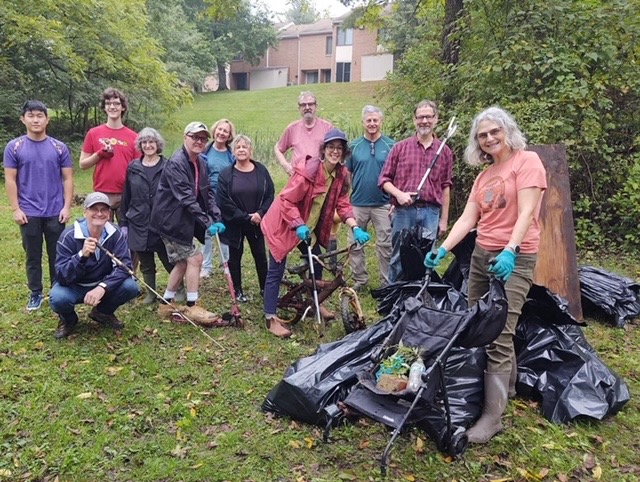 At the Owen Brown Interfaith Center, led by Executive Director Kevin Buker, the Universalist Unitarian Congregation of Columbia UCC Climate team does Active Waste Diversion on Sundays. The team collects recyclables and compostables and removes them from the solid waste stream. They also use compostable tableware and are planning to expand this to the whole Center. Composting is a great action congregations can take because it eliminates the use of plastic and addresses food waste at the same time. The Owen Brown Interfaith Center uses compost to nourish garden and landscape beds and shares it for people’s personal gardens. Oakland Mills Interfaith Center has also implemented composting to reduce food and plastic waste. Hans Plugge, OMI Green Team member, suggests “if you are going to do it, do it all the way!” Too much non-compostable material was ending up in their bins, so they became their own wholesaler of compostable tableware and got rid of everything that couldn’t be composted to prevent confusion. Sometimes changing behavior requires creativity to ensure compliance!
Another action Howard County congregations have taken is to install bottle-filling stations to reduce the need for bottled water. This is an easy way to reduce fossil fuel emissions - water is HEAVY and shipping it requires a lot of energy- and plastic bottles. At IPC’s Chesapeake Lands and Waters Interfaith Summit in April, we hosted a plastic reduction workshop with Martha Ainsworth from the Maryland Sierra Club Zero Waste Team. The Sierra Club has worked with IPC on efforts to pass the Maryland Bottle Bill - a statewide policy aimed at reducing plastic waste - and has done a number of events in Howard County that congregations in other regions could learn from, including a public film screening of “We’re All Plastic People Now”, panel discussions, outreach at local schools, and trash cleanups. This type of outreach is key; as Crystal Konny of the Howard County Sierra Club Zero Waste Team put it, ”When people are aware of the plastic issue and what they can do to have an impact, they are willing to act. Education and communication are key; finding a way to get the word out is very hard.” The actions of Howard County OCS, Sierra Club, and the partner congregations make one thing clear: When we work together, we can make a meaningful difference for our community. Even small actions have a ripple effect that can amplify their impact. If you want to take action, our resources page has a number of Action Kits and Menus for Action to help get you started. The IPC team is also excited to discuss options in your community and help find funding.

Do you like this page?