
From Climate Conversations to Community Action:

For more than six years, St. Luke’s Episcopal Church in Eastport has been showing what it looks like when a congregation turns care for Creation into action.
Under the leadership of Rev. Bloom, St. Luke’s has built a lasting partnership with Interfaith Partners for the Chesapeake (IPC), growing its environmental work from conversations about climate and faith into hands-on restoration, tree planting, community cleanups, nature walks, and opportunities to bring people together around a shared love for the Chesapeake.
Starting with a Conversation
St. Luke’s first connected with IPC through Climate in the Pulpits in 2019, creating space for members of the congregation to explore the connection between faith, climate change, and caring for the Earth.
They continued that conversation in 2020 with another Climate in the Pulpits program. These early conversations helped create a foundation for something bigger: a congregation not only learning about environmental challenges, but asking what it could do in its own community.
By 2021, that commitment was becoming increasingly hands-on.
Turning Faith Into Action
In August 2021, St. Luke’s participated in a number of IPC activities, including a congregation meetup, tree training and sale, project maintenance, and signing IPC’s Partner Congregation Pledge.
These efforts reflected an important shift into putting their conversations into action.
Tree planting and maintenance became part of that work, giving the congregation an opportunity to improve its property while contributing to the larger health of the Chesapeake Bay watershed. Trees can provide shade, support wildlife, reduce stormwater runoff, and help protect local waterways.
But the work did not stop with trees.
St. Luke’s has also invested in stream restoration and conservation landscaping, creating spaces that can better manage stormwater and support a healthier local environment.
Caring for the Neighborhood Beyond the Church Property
St. Luke’s commitment to Creation care extends beyond its own grounds.
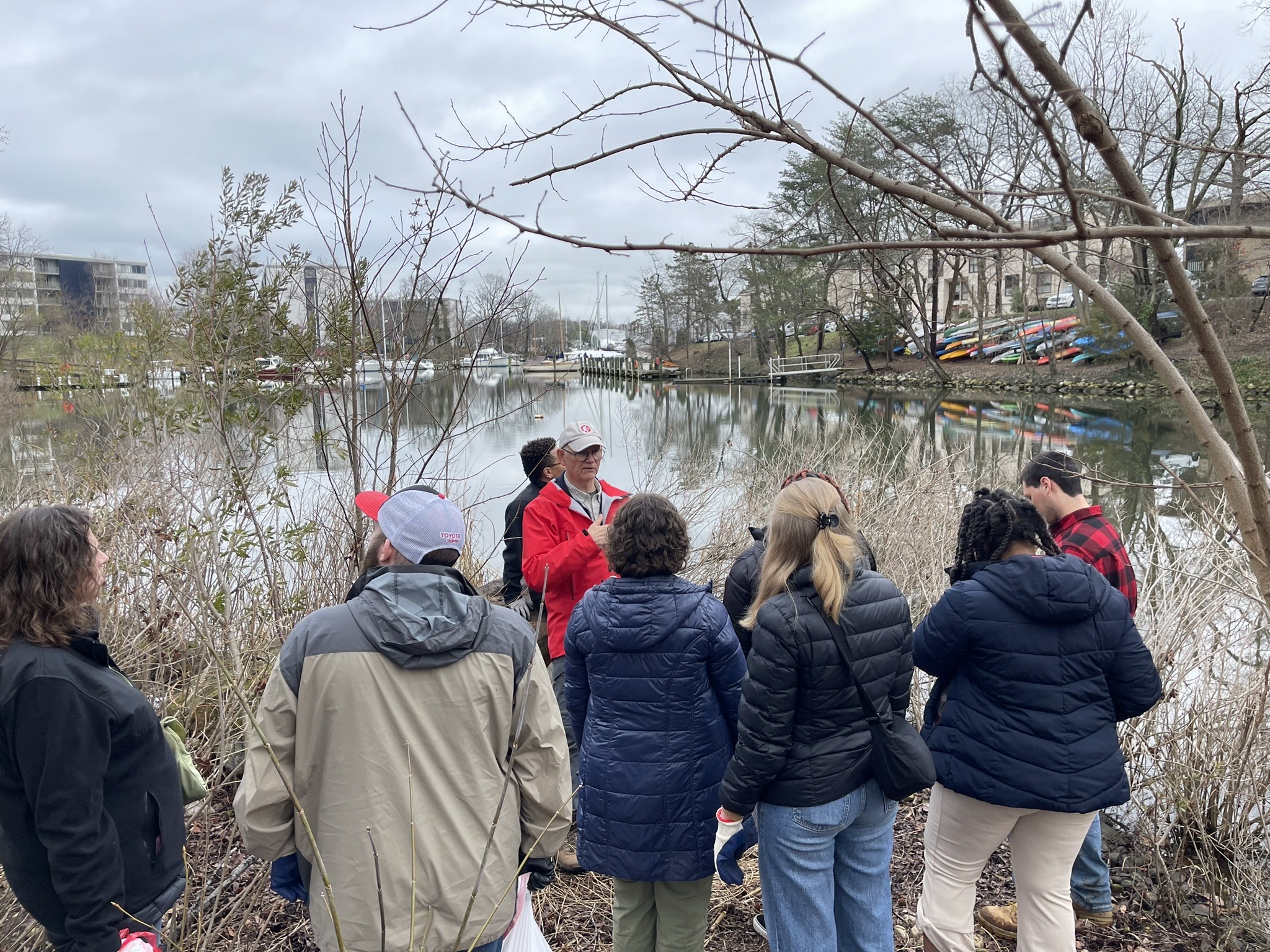
In 2022, the congregation organized a neighborhood trash cleanup and continued maintaining its restoration projects.

They have also welcomed groups from outside the congregation to participate in service days, including students from Hood College and Elizabethtown College and the U.S. Naval Academy Midshipmen Action Group.
They give people from different backgrounds an opportunity to work side by side while caring for a shared place.
In 2022, St. Luke’s hosted an Interfaith Nature Walk, bringing people together to experience and appreciate the natural world. The congregation has also hosted its annual Earth Day and the Arts Festival, creating space for environmental education, creativity, and community connection.
A Commitment That Continues
St. Luke’s environmental work has continued through 2023, 2024, and into 2025, with additional service days, cleanups, Earth Day events, and ongoing project maintenance.
Restoration is not something that happens once and is finished. Trees need to be cared for. Native plantings need maintenance. Streams need continued attention. Communities need opportunities to come together again and again.
St. Luke’s has embraced that long-term approach.
Their partnership with IPC shows how a congregation can grow its Creation care work over time—starting with a conversation, building knowledge, taking action, and continuing to invest in the health of its community.
Your Congregation Can Make a Difference, Too
St. Luke’s story is a reminder that you do not have to do everything at once.
Creation care can begin with a simple conversation. Faith communities have something special to offer environmental work: people, land, relationships, and a commitment to caring for something larger than themselves.
Your congregation can be part of this work, too. Learn more about partnering with Interfaith Partners for the Chesapeake and discover how your congregation can turn its land and community into a force for restoration.

Do you like this page?