
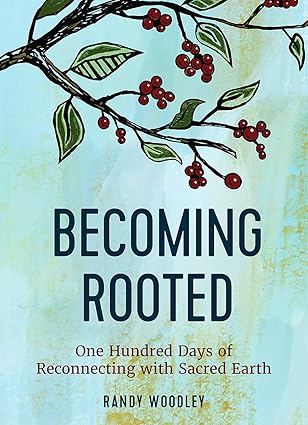
 As November is National Native American Heritage Month, this reflection invites us to consider a question: What does it mean to live a way of life that is indigenous to the ecology of where we live? In his book Becoming Rooted, One Hundred Days of Reconnecting with Sacred Earth, Randy Woodley, a Cherokee and theologian, points to an important distinction between Indigenous and indigenous. “Indigenous people are those who originate naturally from a certain land, who have dwelled there for a long period of time. To be Indigenous is to become rooted... Indigenous people understand how to live with the land.”
As for indigenous, he goes on to affirm – “we are all indigenous, from somewhere.” Whatever our ancestral history, if we go back far enough, our ancestors were indigenous. They knew how to live in harmony with the land and waters in a way that did not take more than they needed, and maintained the health of the local ecology. So using “indigenous” to describe a way of life is not appropriating the term. Rather, it distinguishes itself from Indigenous Peoples.
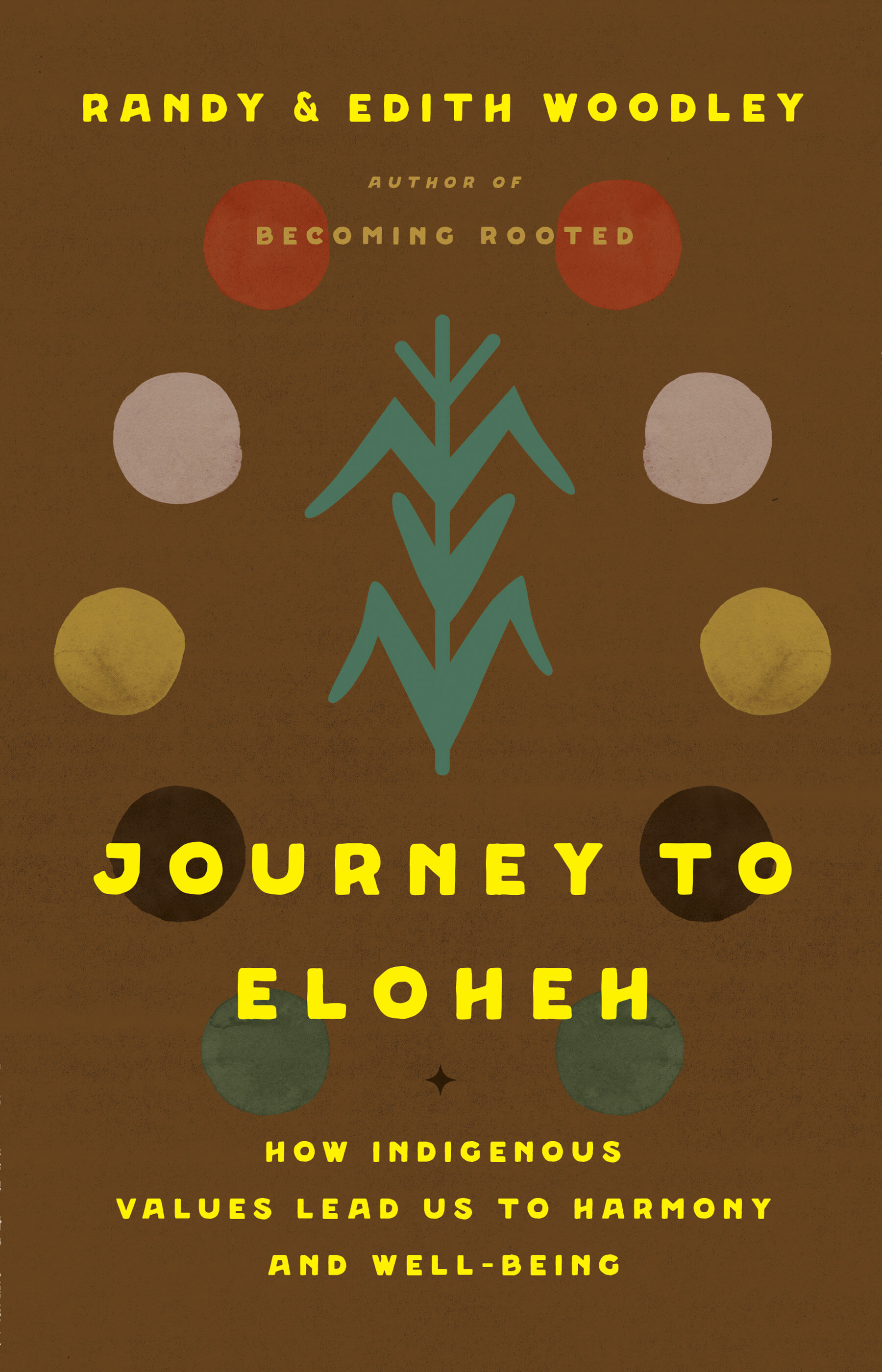 In Woodley’s recent book, Journey to Eloheh: How Indigenous Values Lead Us to Harmony and Well-being, he notes that the dominant Western worldview (or way of thinking that informs action) is an anthropocentric attitude that views not only people but Earth as commodities or objects. His guidance is that “the path to better health, wellness or well-being” for people and Earth is decolonization and re-indigenation. What does this look like? We – both Native Americans and “Non-Natives” must go through a process to “peel back the layer of the false myths [e.g. that we are separate from Earth vs. intricately interdependent] ... to hear from those who have differing stories and to become intimately acquainted with the land.” [emphasis mine]
When we have an intimate understanding of our local environment, then, like we would for beloved family relations, we notice where there is ill-health or our lifestyles are adversely impacting our more-than-human neighbors in the watershed that we share. As a botanist, Potawatomi, Robin Wall Kimmerer, in her book The Serviceberry, describes these relationships as “a gift from the land [which] is coupled to attached responsibilities of sharing, respect, reciprocity and gratitude...” What if we had a more familial and reciprocal relationship with the land and water wherever we live? In this way, we adopt an indigenous worldview that acknowledges beings in the natural world as subjects rather than objects. Even St. Francis named his neighbors in nature as extended family, like Brother Bird and Sister Water, all members of the one family of God’s creation.
”In the end, we will conserve only what we love, we will love only what we understand, and we will understand only what we are taught.”
~ Environmentalist, Baba Dioum
When we name the Indigenous people of this country Native Americans, the word “native” also connotes being indigenous to their land and waters, adapting to their local conditions for mutual survival. “What does ‘native’ mean?” was a common question during the years I facilitated workshops for IPC’s Trees for Sacred Places program about the ecological benefits of planting native trees and plants. I learned through this work that native plants are those indigenous to these lands and waters; that is, they co-evolved together with the other flora (plants) and fauna (animals, insects, birds) of this bioregion, so they are called “native.” What impact could becoming familiar with the native flora and fauna in our neighborhoods have on the wider environment? We see how the more we learn about the benefits of native plants and animals, the more likely we are to promote pollinator plants in landscapes to support local bees and other insects, which in turn, support birds and other wildlife in an intricate web of life. This is key as we are increasingly called to practice an indigenous way of life through adaptation, as changing conditions of our climate become ever more significant.
This kind of indigenous knowledge or ecological literacy is an impetus for motivating our caring actions to heal and protect the watershed where we live. As Senegalese environmentalist Baba Dioum said, ”In the end, we will conserve only what we love, we will love only what we understand, and we will understand only what we are taught.” In other words, learning about your local ecology, waterways, plants, birds, insects, and other life leads to an appreciation that can foster love for the nature expressed wherever you live. That love can inspire action (conservation/ care for creation). What if love for and honoring Earth as sacred were at the heart of our desire to care for Earth?
In his book Earth Honoring Faith, my seminary professor, Larry Rasmussen, invites people of faith to what sounds like an indigenous way of life! He proposes this centering principle to express our faith:
What kind of faith is life-centered, justice-committed, and Earth-honoring, which a moral universe encompasses the whole community of life, the biosphere and atmosphere together as the ecosphere? What kind [of faith] imports the primal elements---earth (soil), air, fire (energy), and water--into the moral universe and centers them there? ... What [kind of faith] uses a single stringent criterion--contributions to an Earth ethic and robust Earth community--as the plumb line that measures all impulses and aspirations?
 As I’ve reflected on the ways that embracing an indigenous way of life can help heal our relationship with our local lands and waters, it has become obvious that IPC has, from its inception, made its mission of training people of faith to become more indigenous to their local lands and waters! By so doing, we can live in greater harmony with our plant and animal relatives. Then we honor not only Earth, but also the heritage of the original inhabitants of these lands and waters, the Indigenous Peoples, still living here in the Chesapeake Bay region and throughout North America. We are all members of the one family of our common Creator.
* Earth intentionally appears herein without an article “the.” Robin Wall Kimmerer invites us to name Earth without “the,” just as we would our human relationships.
Do you like this page?