
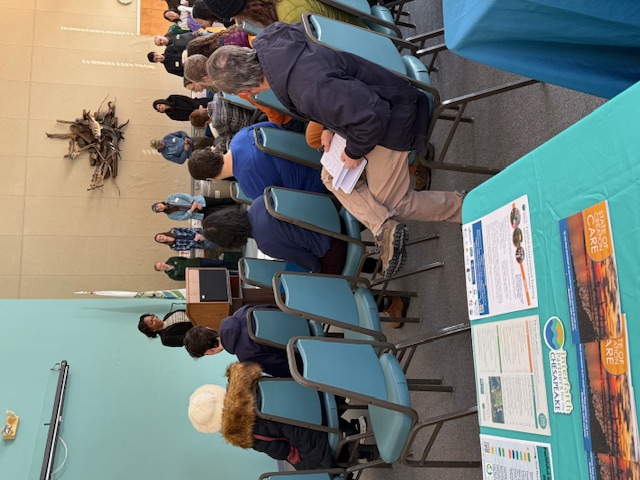
 This winter, partners from across the region gathered at the Izaak Walton League of America for a DMV Winter Salt Week Open House, an educational morning focused on one small practice with big consequences: how we salt our roads, sidewalks, and parking lots.
Road salt is widely used to keep people safe during icy conditions, but its impacts don’t disappear when the snow melts. Salt is bioaccumulative, meaning it builds up in our soil, streams, and groundwater over time. Across the Chesapeake Bay watershed—including Montgomery County—scientists are observing troubling increases in salinity in local waterways and drinking water sources. Once salt enters these systems, it is extremely difficult to remove.
At the Open House, participants learned about current road salt practices, explored water testing demonstrations, and heard from speakers about the environmental and infrastructure damage caused by over-salting. While awareness is growing, the conversation also highlighted a major challenge: meaningful change has been slow, often due to resistance from businesses and the lack of required training for contractors.
This is where congregations and faith communities can lead.
Many congregations manage large properties, contract snow removal services, and serve as trusted voices within their communities. With informed leadership, faith communities can model smarter salting practices that keep people safe and protect the waters we all depend on. Education—knowing how much salt is actually needed, when alternatives work, and how to store and apply salt properly, can significantly reduce harm without compromising safety.
To support this work, we partnered with the Izaak Walton League to develop a Reducing Road Salt Action Kit, a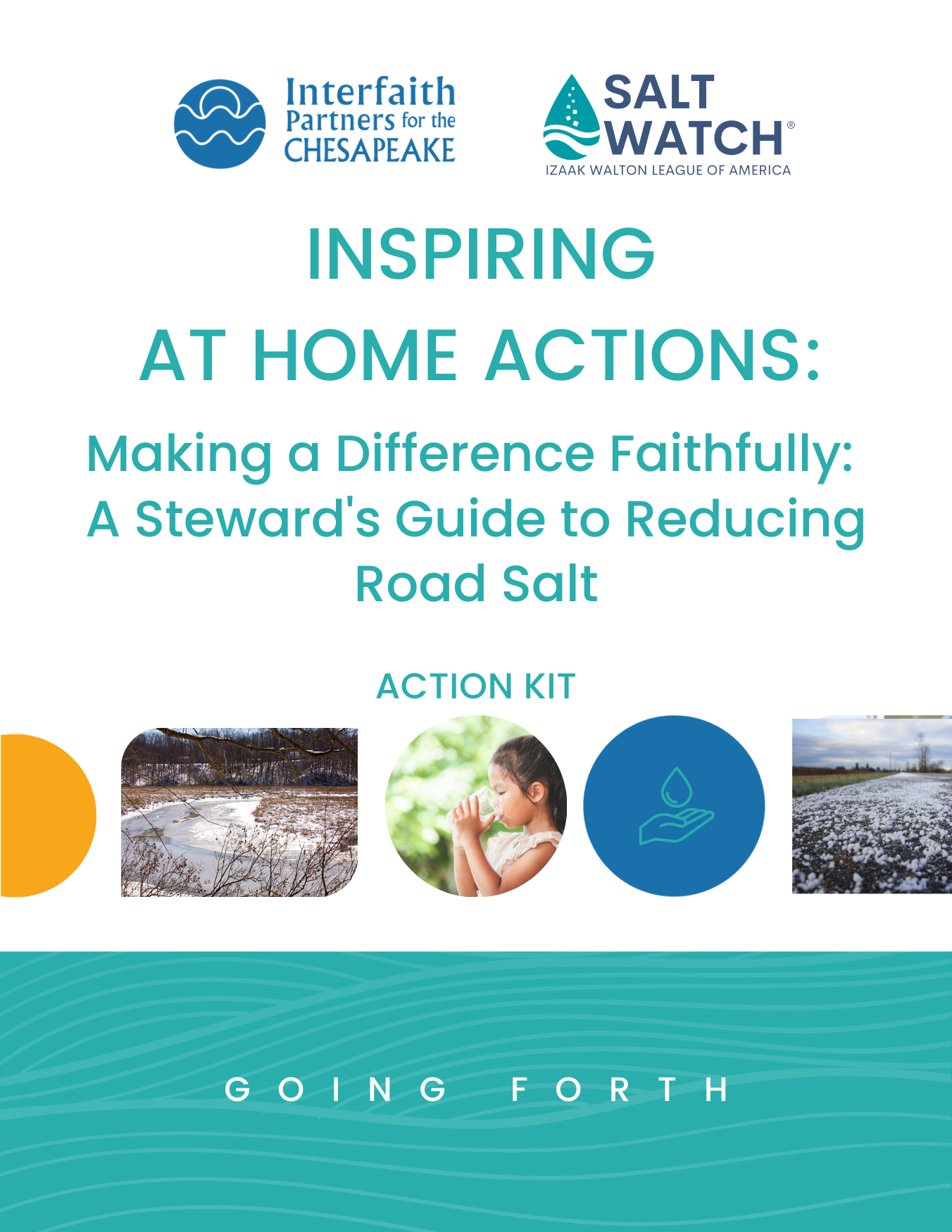 step-by-step resource designed for congregations and households alike. The kit offers practical guidance on evaluating current practices, talking with contractors, and making simple changes that add up to real impact. We also hosted a dedicated Learning Lab featuring partners to discuss water quality and infrastructure impacts, who shared how road salt affects groundwater and long-term ecosystem health right here in our region. View the recording of the session here.
Now is the time to act. We invite congregations and individuals to ask important questions:
- How is salt used on your property?
- Are contractors trained in smart salting practices?
- How can your community reduce salt use while keeping walkways safe?
By choosing smarter salting, congregations can protect the Chesapeake Bay, safeguard drinking water, and witness to a faith that cares deeply for creation and community well-being.
👉 Explore our Reducing Road Salt Action Kit and learn how you can take action this winter.
👉 Watch our Learning Lab recording to hear directly from water quality experts.
Small changes. Safer winters. Cleaner water. A shared responsibility we can meet—together.
Do you like this page?