
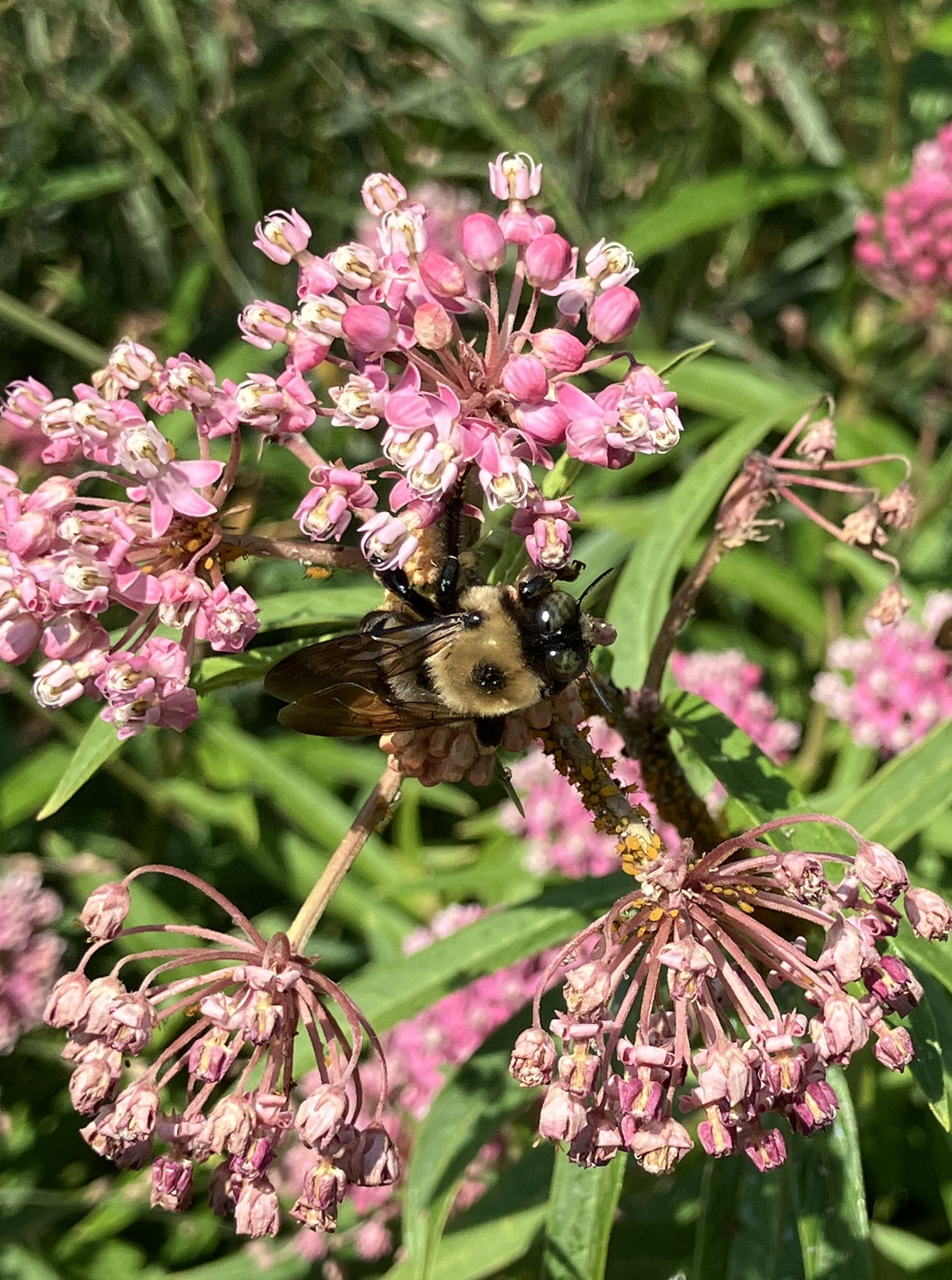
 When a congregation or neighborhood–or you in your backyard!–begins to plan and research a potential stormwater best management practice (BMP), we are often thinking about storms and how to mitigate the ensuing flooding; we may also think about the quality of the water, about filtering more excess nutrients or limiting the spread of hazardous chemicals in our runoff. Although we broadly recognize that these actions result in a healthier environment with more robust ecosystems, fewer of us think long and deeply about the specific plants and, especially, animals that we also support when we take these actions. We are not only addressing stormwater when we install a BMP, but we are also presented with the chance to protect and restore habitats.
  For very obvious reasons, when we think about the ways we plant a rain garden or a bioswale, we are considering three main things: 1) whether a plant is native, 2) how resilient and easy-to-maintain a plant is, and 3) how aesthetically pleasing the plant looks. If our plant is a non-native with invasive potential, if it requires a very narrow range of growing conditions, if it is easily damaged by flooding or occasional exposure to road salt, or if it has a weedy, unkempt look, then that plant is generally a poor choice and best avoided. For many, that’s the deepest look these plants will get, but there are other factors that can be taken into consideration. But, for many plants, even hardy and widespread ones, there are habitats in which they are more common and certain species with which they often associate; those associated plants within those habitats often support a unique set of pollinating and plant-eating insects, which form the base of complex communities. When we start to consider these factors, the act of creating a rain garden not only protects our properties from flood damage and our streams from silting up; our actions contribute to the restoration of the ecosystems around us or, in some cases, create entirely new healthy, resilient ecosystems where there have been none.
There are good reasons that the sturdiest and easiest-to-acquire native plants are among those that we use the most heavily; in many cases, some of these species should form the backbone of any new habitat, and in some cases, these species work well together and create very resilient habitats for many species. There is also value in doing a little extra reading to find out if the plant you want to use supports any unusual or rare insects, or if there are birds who are seasonally reliant on that species. And when you see one of those common, tough species out in nature, take notice of what grows with it; are the species sharing space with other commonly-used plants, or are they associated with less-familiar species? Considering these other factors and expanding our horizons to take inspiration from those wild habitats that still exist, we protect ourselves and the physical health of our environment while creating habitat for our native plants and wildlife.

Do you like this page?