
 One of the great joys I have had while working for IPC has been experiencing firsthand the myriad ways that faith communities find to express their love for nature. Of course, there are the tree plantings and the restoration work in the form of rain gardens and meadows, and there are blessings and dedications to celebrate these projects; there are movie screenings and guest speakers who are brought on to educate and inform; and some communities utilize their outdoor spaces during worship or times of fellowship and gathering. Many are able to take a range of actions with their congregations and communities, and many offer prayers and raise their voices to rejoice with words of joy and veneration for our plant and animal neighbors. I still find it genuinely inspiring to see such creativity in the ways people of faith show their dedication.
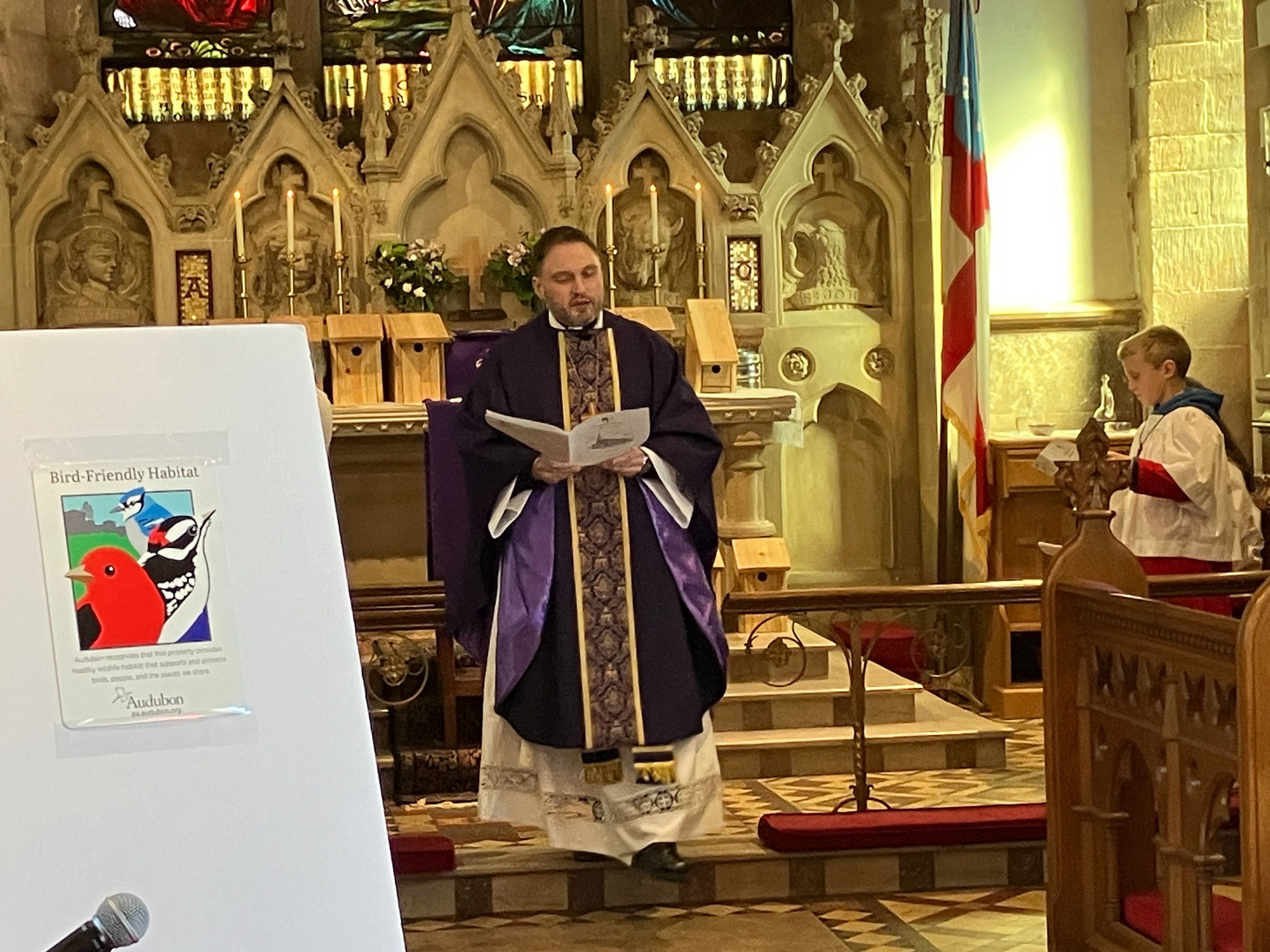
When I first met the folks at Hope Episcopal Church, they embodied that creativity in every way; with a property that included not just a historic church building and a fellowship hall, but also a stretch of tall, healthy, streamside forest, the congregation and its Rector knew they had something special, and they knew they wanted to recognize that. In conversations with the Rector, Bradley Mattson, and the then-leadership of the Green Team, I heard about a vision for Hope where the congregation could be a place of rest, peace, and healing, not only for the people of the community, but also for the natural world around them. They saw a future where Hope’s campus included a new playground and space for their youth ministries, alongside rain gardens and pollinator gardens full of native plants; where the forest and the stream are a part of their spiritual identity, as well as their physical home; and where birds and animals can find shelter and respite from the busy world around. It was a beautiful vision, one which they were already taking steps to achieve. They had used the forest for worship and the stream for a baptism; a pollinator garden was already underway; and the Green Team had begun to plan for a campus-wide Green Master Plan. They spoke of how they would create a place where nature and their congregants could be at home together, but it seemed they were already well on the way to realizing their dream.
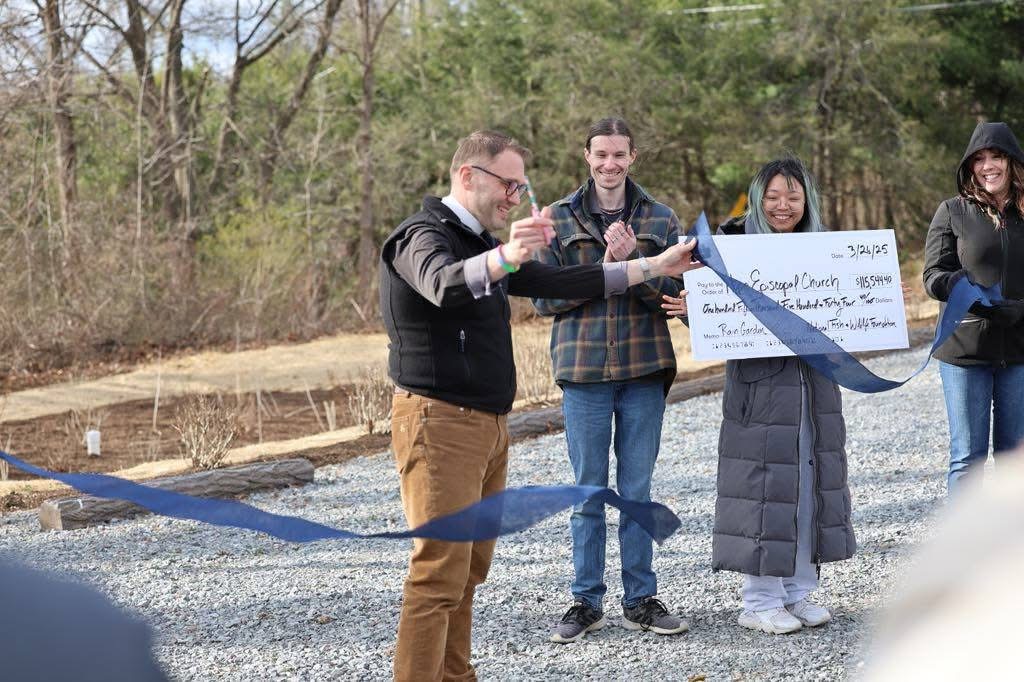
 More recently, the leadership of Hope’s Green Team has changed, but the progress has not. In the spring, the first rain garden was installed and dedicated at a celebration that included Bishop Audrey Scanlan of the Episcopal Diocese of Central Pennsylvania, and which celebrated the more than half-dozen partners who helped make the installation possible.
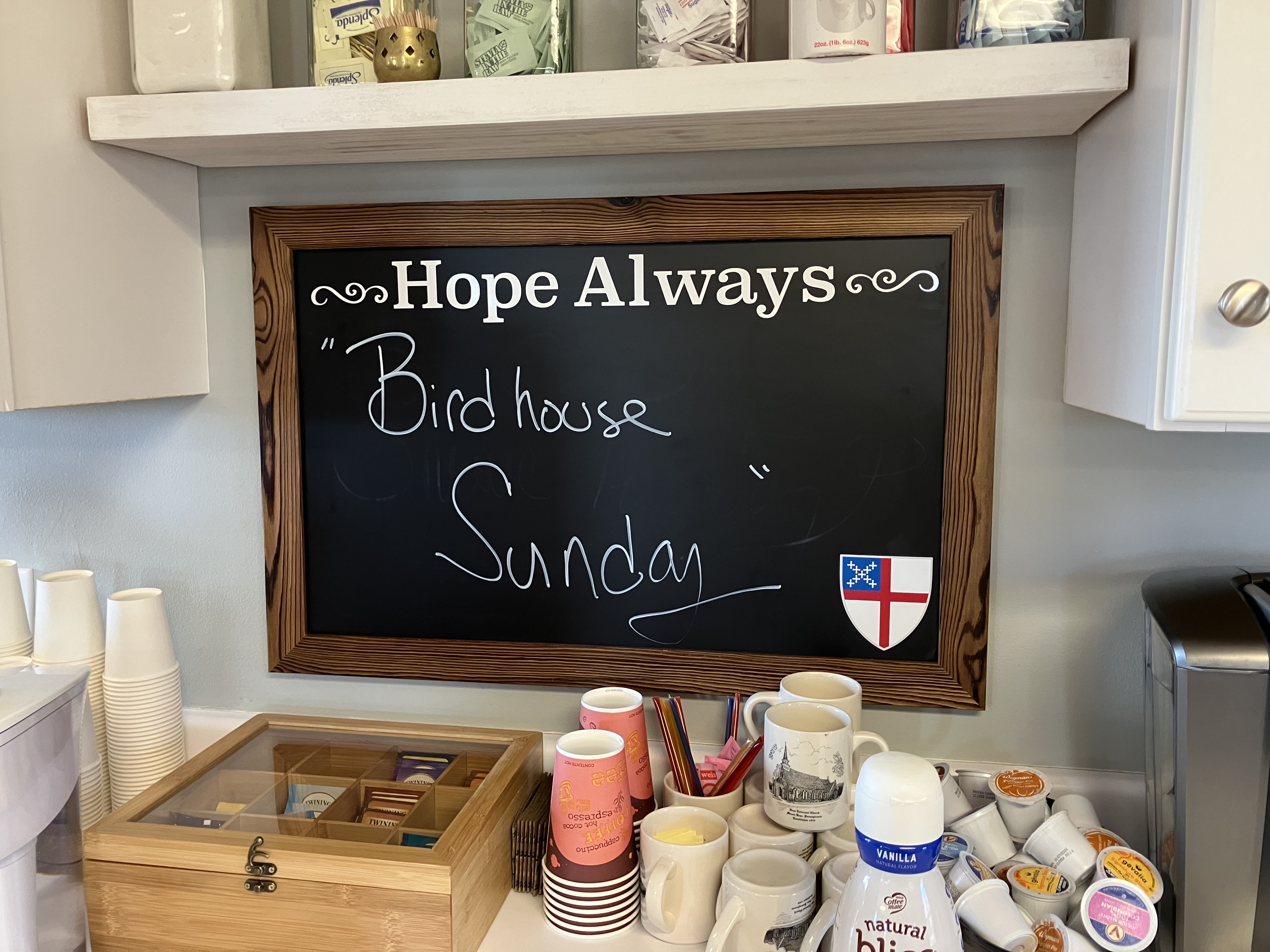
The congregation is also now eagerly awaiting the chance to review the first draft of their Green Master Plan, painstakingly prepared by the Center for Watershed Protection; a plan which will advise the congregation on ways to continue reimagining their campus while addressing stormwater and creating wildlife habitat; recommendations that, should they come to fruition, will join Hope’s woodland trail system, their numerous bird houses, and—now—their rain garden.
Across the watershed, there are congregations engaging in all kinds of work to honor and care for Creation. Even as Hope Episcopal Church has started and completed projects and its Green Team has reinvented itself, other congregations were just getting started, and others were thinking of how to reinvigorate or maintain their efforts. Just in Lancaster County, there are around two dozen congregations that have signed the Partner Congregation Pledge over the years, attending trainings and educational workshops, hosting events, and installing projects to capture stormwater. And while it’s true that much of what this work takes is energy and some dedicated congregants with time to give, there are often still challenges. It can be hard to find a contractor and maintain a project; succession planning is genuinely hard; and sometimes a project just doesn’t work out well; and no one ever has enough time.
 Of course, that’s why so many congregations turn to partners, like IPC; we can’t always fix every problem, but more often-than-not, we can help or find someone else to help. We often reference the image of a puzzle when visualizing describing IPC and what we do. We are the piece in the middle of the puzzle, helping to connect all the other pieces that are necessary to help congregations realize their goals. It requires a whole community of folks to move forward with this work; IPC is one part, and a part that is especially familiar and important to our OWP partners, but there are many others that are needed to create successful outcomes.
As a community, Lancaster comes together yearly to recognize and celebrate the work of a whole host of organizations that serve the region, and to support them as the year draws to a close. Those who are from this region will be familiar with this event, the Lancaster ExtraGive. This year, the ExtraGive will be held on November 21st, and, for our third year, IPC will be one of the organizations participating. Keep an eye on our website for details about our events that day and for more information about the ExtraGive; we are planning events to celebrate our own accomplishments and those of our OWP partners and to look uplift work that is yet to begin. We hope to see many of you in Lancaster that day!

Do you like this page?