
I grew up a five-minute walk from Mayo Beach Park, at the very end of the Mayo Peninsula in Anne Arundel County, Maryland. In 2002, my mom would tote my younger brothers and me to the community beach (an incredibly short but necessary drive with twin toddlers), and we would scoop bull minnow in a shallow pool of water just behind the jetty jutting out into the bay. That small, tidal pool of water would hold everything from silversides to blue crab, shining open mussel shells, and all sorts of other critters I was just learning the names of. The jetty also marked how far out we were allowed to wander (“Don’t go past the last rock - we see you!”). The beach was shallow, with a long stretch of sand extending deep into the water. We would lay towels out on it, play mermaids, and bury our shiniest mussels from the shallow pool and call them “treasure”.
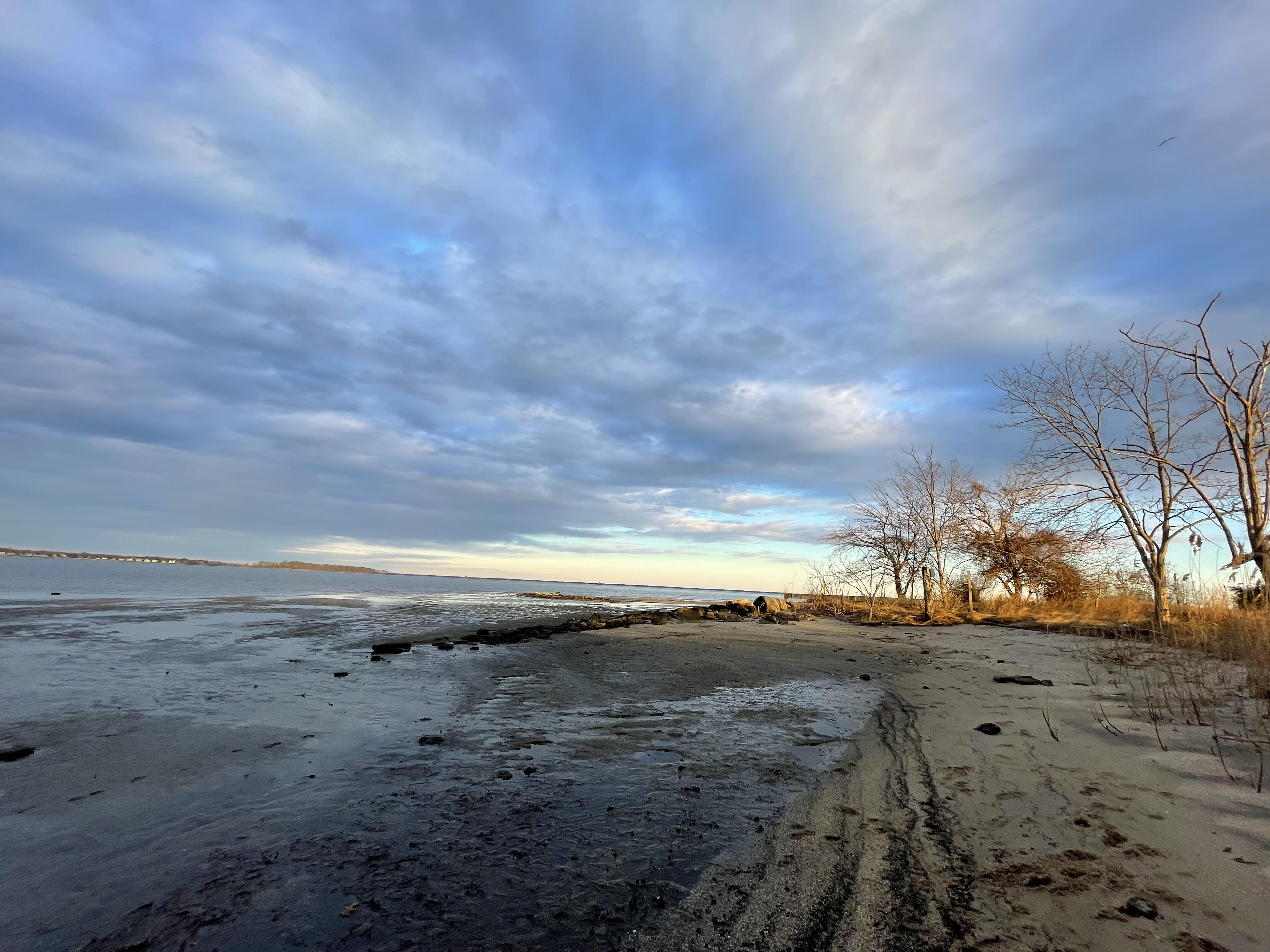
In 2003, Hurricane Isabel came and hit the Beach and much of the Chesapeake region hard. Brackish waters inundated the lowest-lying parts of our neighborhood, and the homes closest to the Beach were flooded. Thank goodness, property was all that was lost… except our little beach.
After Isabel, the wide expanse of sand was whittled down to a narrow strip. Our little pool was gone. I will never forget my first time back at the beach after Isabel - I almost didn’t recognize her. If it weren’t for that lone little jetty and the ever-present view of the far Shore, I may have thought myself somewhere else in sand and time. One of the deepest parts of the Beach, around the outflow of Big Pond, was now so shallow I could walk across the sandbar into Mayo Beach Park proper.
My parents never moved, and I never stopped going to the beach. In middle school, my friends and I would skip stones along the shallow band of sand and run across the muck at low tide. In high school, we would catch white perch from the Bridge and wade far out past the lonely jetty. In college, the Beach was always the first place I took someone if I wanted them to understand my hometown, to understand who I am. Each visit to the Beach, I would think about the days when the sand went on and on, and in truth, at times avoid the Beach because how she had changed so much made me sad.
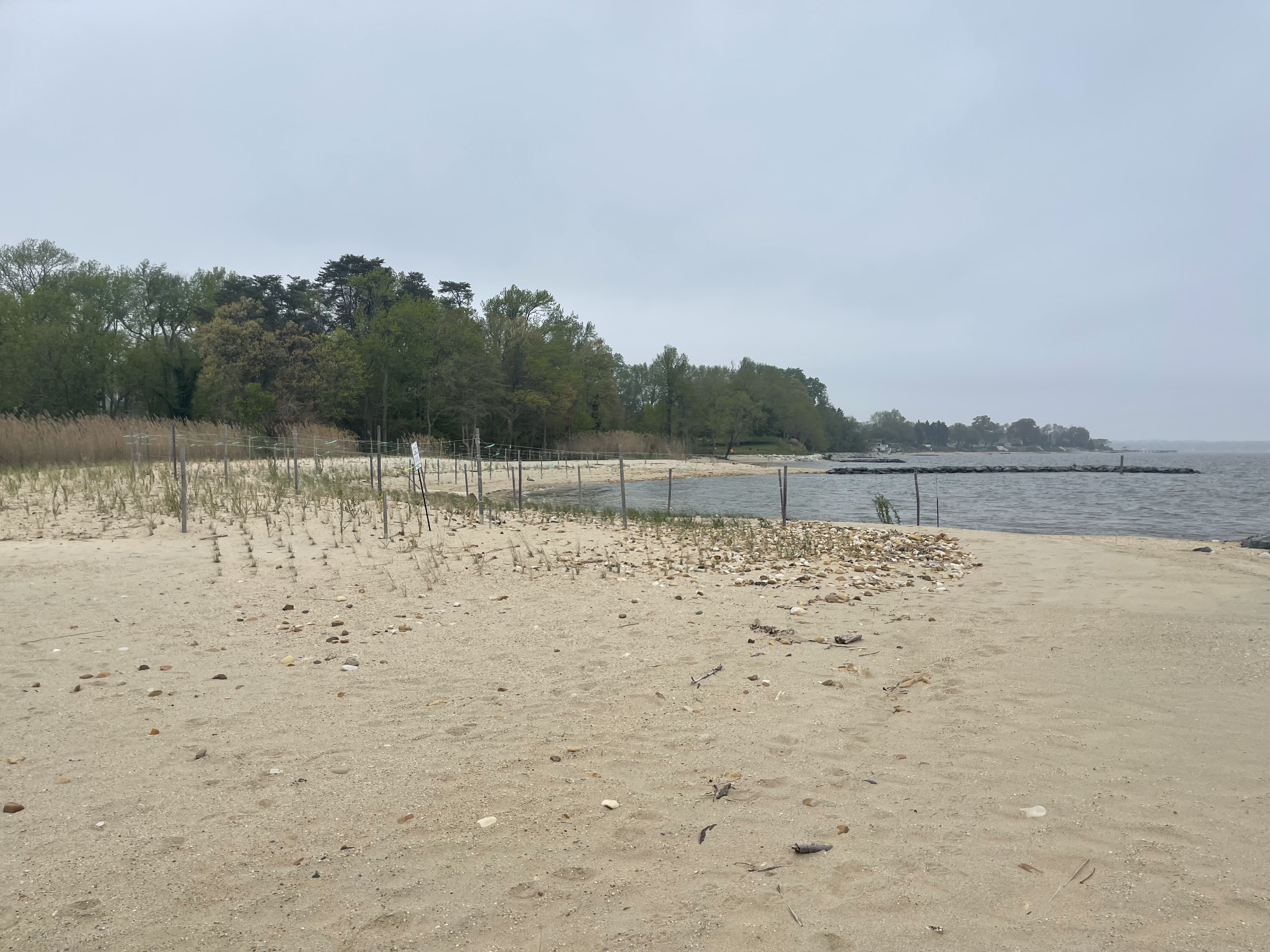
Then, one day in June a summer ago, I went to the beach alone. Something that day called me to go - I’ve always found my heart there, and maybe that day my heart needed a little filling. I walked down to the Beach and stepped back into my childhood. Somehow, the beach was back! Her expanse of sand was so great I could run across it without dodging phragmites and the old piles of driftwood. Our old beach! So big we could lie out on it and spin circles without seeing the road. Just a year ago, it seemed like she was lapping at the ditches during each high tide. Now, a hefty, tall dune planted with grasses separated her from the pavement. A quick glance at some newly-installed signage and Google let me know that Arundel Rivers Federation, a local watershed restoration group, had acquired the funds necessary to restore the beach.
Seeing my home beach, a place where I had learned to fall in love with the Chesapeake and all who depend upon her waters, restored brought (and brings) me great hope. For me, the Buddhist metaphor of Indra’s Net speaks to the incredible impact that restoration work can have.
The metaphor is as follows: Imagine a net stretching infinitely in all directions. At each connection point in the infinite net, there is a jewel, shiny and bright. Each jewel infinitely reflects the images of all other jewels in the net; whatever is present in one jewel is present in them all. Whatever happens to one jewel is reflected in them all.
Indra’s Net is a beautiful metaphor demonstrating the unseen and unknown ripples of impact our actions have across people and time.
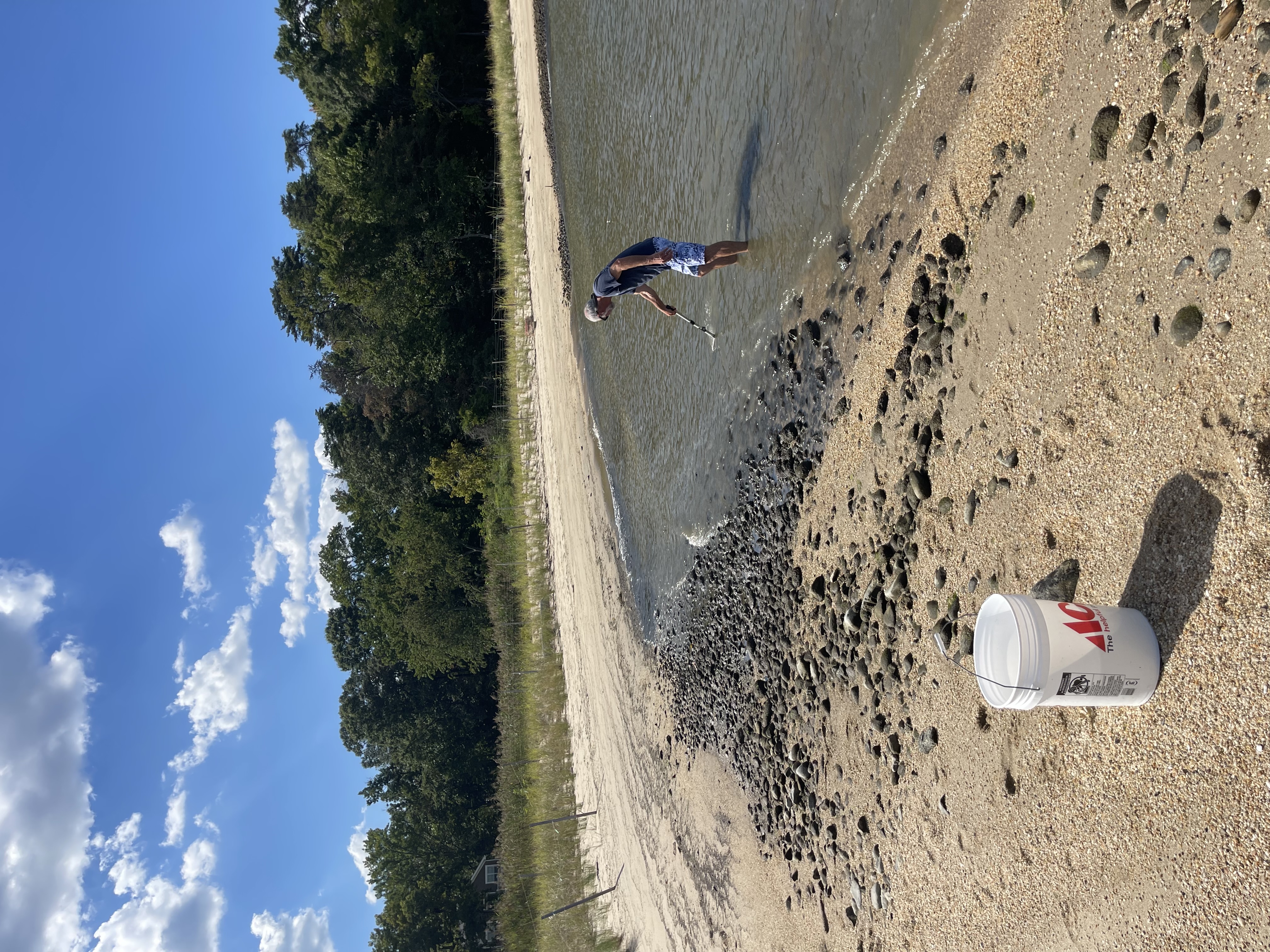
The last few times I visited the beach, there were kids playing in the sand and wading out into the shallow water. Their beach towels were littered with sand and surrounded by buckets of water. Little hands tightly clasped dipnets as they jabbed them into the water, sometimes returning with bull minnows or silverside, ever-abundant at the Beach’s shore. Indra’s Net tells us that we are each a gem in the net, infinitely reflecting all other gems. Now that the Arundel Rivers Federation has restored the beach, I wonder what the yet-seen ripple of its impact will be. Maybe new kiddos will fall in love with fish and osprey visiting the beach. Maybe those kids will see the beach change drastically in their lifetimes and be inspired to help find solutions to make beaches more resilient.
We never know all the impacts that we are having as we move through the world. When you plant a tree, create a pollinator garden, or restore a beach, you might just be filling someone’s heart with hope or setting them off down their own inspired path. Restoration work goes beyond the obvious of increasing habitat or returning an ecosystem to balance - it also opens keyholes for folks to connect with natural spaces and grow their love for them.

Do you like this page?