
Diwali: A Festival of Lights
Light brings hope and joy. Diwali, a festival of light, is one of the most significant religious festivals originating in India. It signifies the spiritual victory of light over darkness, positive energy and happiness, knowledge over ignorance, and most importantly new beginnings.
Light brings hope and joy. Diwali, a festival of light, is one of the most significant religious festivals originating in India. It signifies the spiritual victory of light over darkness, positive energy and happiness, knowledge over ignorance, and most importantly new beginnings.
"Thousands of candles can be lighted from a single candle and the life of the candle will not be shortened. Happiness never decreases by being shared" ~ Buddha.
 Origin:
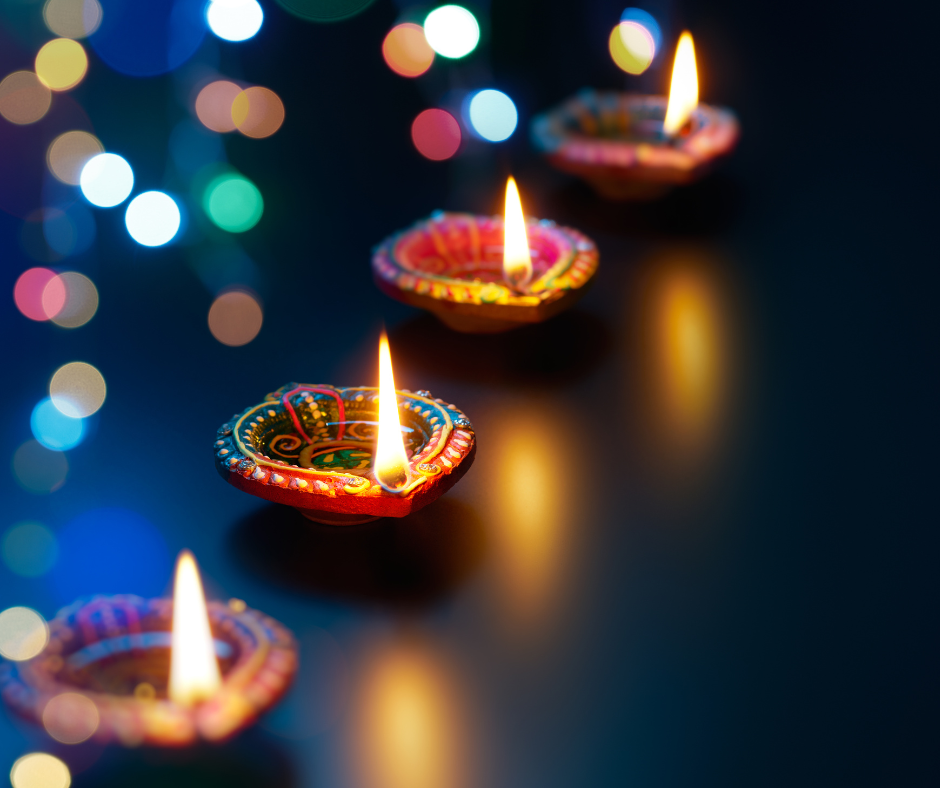
The name Diwali (Deepavali) originates from the ancient Indian language Sanskrit (an Indo-European language that emerged around 1500-1700 BCE). In Sanskrit "Diwali/Deepavali" means "a row of lights" or "a series of lamps", where Deepa/ dīpa stands for "light/lamp" and āvalī stands for "a row". The name refers to a tradition of lighting oil lamps, called 'Diya' in Hindi and arranging them in rows and patterns with flowers around them. Diwali is celebrated at the end of the month of Aasvin (Aashan) and on the new Moon and four first days of the month of Kaartik of the Hindu calendar, signaling the onset of colder weather. In addition to the significance and marking of a seasonal change, Diwali is also celebrated when the rice-crop harvest ends, giving way to the manuring of the next crop.
Rituals of Diwali:
The festival of Diwali lasts for five days and it marks the start of the Hindu New Year. The exact dates change each year and are determined by the position of the moon, usually falling around October and November. The festival celebrates the return of the Hindu God, Lord Rama, after he defeated the demon king Ravana. Most people think Diwali is a Hindu festival, but it is also celebrated by Sikhs, Jains, and Buddhists. The preparations for Diwali begin weeks in advance with cleaning and purifying homes and places of work. This process symbolizes purification, the removal of negativity, and the welcoming of positive energy. The first day of the festival is the most significant, including the third day, and the fifth day holds the most significance and involves unique ceremonies. The first day of Diwali signifies welcome to the goddess Lakshmi who brings prosperity to bless homes and businesses. Courtyards outside homes are decorated with 'Rangoli' which refers to patterns made with colored sand/rice powder and flowers, arranged with rows of lamps around it. The courtyards are decorated to welcome Goddess Lakshmi, purity, wellness, prosperity, and light into our homes. The second and third day of Diwali are for religious prayers and rituals, or pujas. Children look forward to a joyous time to eat delicious desserts and enjoy fireworks at night, making Diwali a night filled with light and joy. The fourth day, Diwali, is also filled with various rituals depending on each family's religious background and individual traditions; people celebrate the fifth day, Bhai Dooj, with their siblings. The fourth and fifth days of Diwali are also a time to meet family and friends to exchange gifts, desserts, and time filled with joy and positive energy.
Natural elements:
Flowers, sand, rice grains, clay and many other natural elements are a part of Diwali. In Hindu culture, flowers like the lotus symbolize purity, prosperity, and spiritual awakening; they also represent the goddess Lakshmi, the deity of wealth, who is worshipped on this festival. Marigolds symbolize prosperity and purity, and their golden-orange color symbolizes the sun's energy. Homes and temples are decorated with Marigolds during Diwali and their vibrant appearance and their deeper symbolic meaning make Diwali a joyous experience. Sand and rice grain powders are used to draw intricate designs called 'Rangoli'. The word "rangoli" comes from the Sanskrit word rangavalli, which means "rows of colors". Rangolis designs with rice/sand powders are decorated outside homes to invite the blessings of the gods into the home, and bring purity, prosperity, and wealth. Most importantly, the 'Diya' oil lamps are mainly made of clay. 'Diyas' made of clay have ancient history in India, with roots in the Indus Valley Civilization (2,600 BC); they are filled with oil and a cotton wick. Diyas represent the triumph of good over evil and spiritual light.
On a personal note, Diwali brings fond memories for me. A religious holiday filled with traditions that bring joy and love. My passion for plants stems back to exploring flowers as I gathered petals to design flower mandalas (designs) around the pretty clay lamps. Spending time with family, friends and neighbors was always a highlight for me, for is there a better way to share joy than to embrace togetherness.
Diwali, a celebration of light and hope, definitely marks a significant time in the Hindu culture, opening doors and hearts for love, joy, and a reminder to care for creation. May the light in this world bring us all peace, joy and togetherness this Diwali.

Do you like this page?